
Thirty years ago today, Tupac Shakur died at a Las Vegas hospital.
He was only 25.
For nearly three decades, his September 1996 murder remained one of the most infamous unsolved cases in music history—surrounded by theories, accusations and questions that seemed destined to remain unanswered.
This anniversary is different.
Just 13 days before the 30th anniversary of Tupac’s death, a Las Vegas jury convicted Duane “Keffe D” Davis of first-degree murder for his role in orchestrating the shooting. It is the first—and so far only—conviction in Tupac’s killing.
Before He Was 2Pac
Tupac Amaru Shakur was born June 16, 1971, in New York City. Before becoming one of hip-hop’s defining voices, he studied acting, poetry, jazz and ballet at the Baltimore School for the Arts.
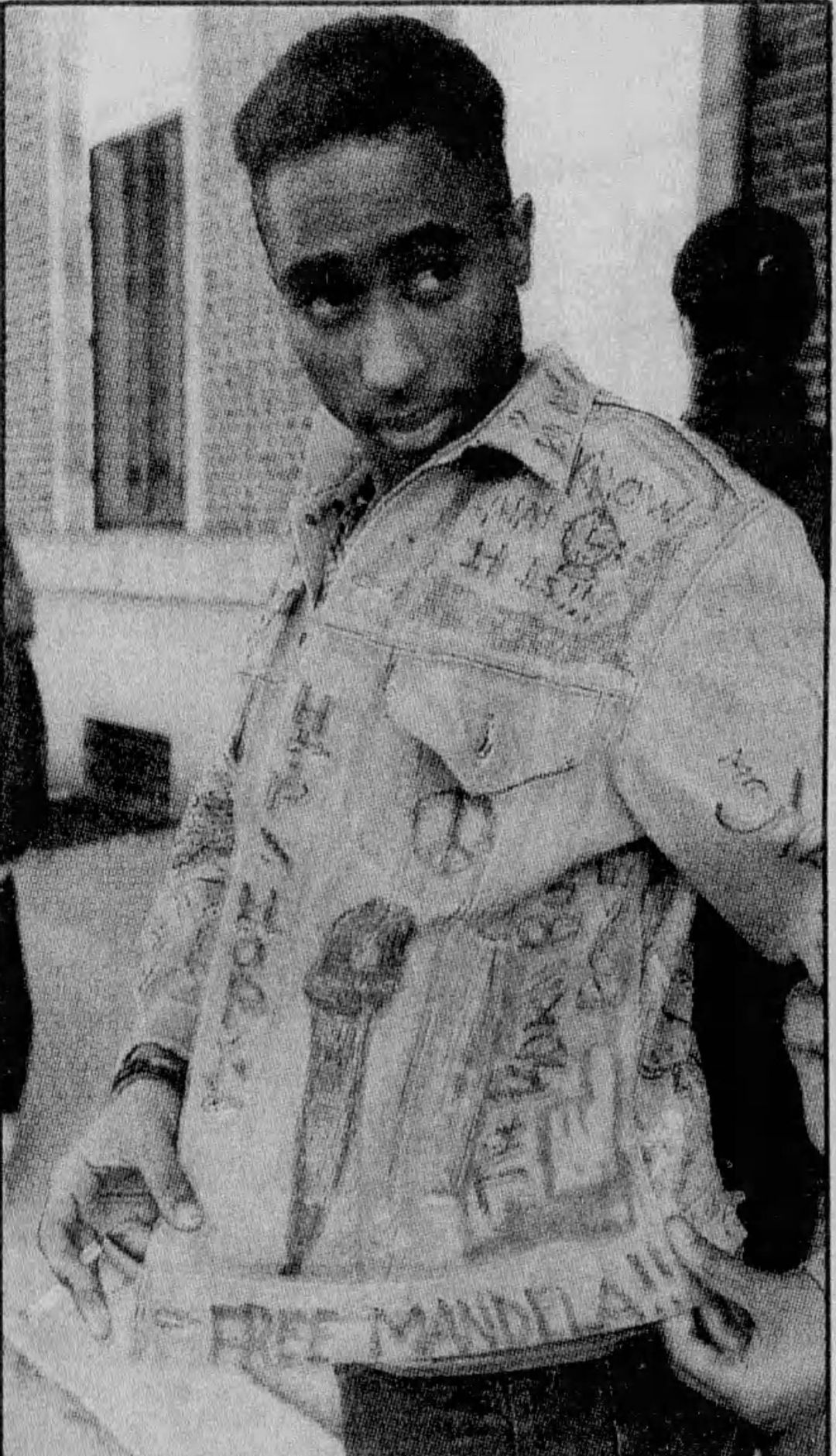
The photograph above captures him in 1988, before the world knew him simply as 2Pac. His customized denim jacket included handwritten words and symbols—including “Free Mandela” and references to hip-hop and his early rap group, Born Busy.
His professional music career took off in the early 1990s, first through his association with Digital Underground and then as a solo artist.
What followed was an extraordinary amount of work packed into an extraordinarily short life.
Albums including 2Pacalypse Now, Strictly 4 My N.I.G.G.A.Z…, Me Against the World and All Eyez on Me established Tupac as an artist who could be confrontational one minute and unexpectedly vulnerable the next.
Songs including “California Love,” “Dear Mama,” “Keep Ya Head Up” and “Changes” helped ensure that his music would continue reaching audiences long after his death.
September 7, 1996
On September 7, 1996, Tupac attended the Mike Tyson–Bruce Seldon fight at the MGM Grand in Las Vegas.
After the fight, Tupac and members of his entourage were involved in an altercation inside the casino with Orlando Anderson, the nephew of Duane Davis.
Later that night, Tupac was riding in a BMW driven by Death Row Records co-founder Marion “Suge” Knight when a white Cadillac pulled alongside them at a red light near the Las Vegas Strip.
Shots were fired into the BMW.
Knight was wounded.
Tupac was critically injured.
Six days later, on September 13, 1996, Tupac Shakur died.
He was 25.
Nearly 30 Years Without a Conviction
The killing became one of music’s most notorious cold cases.
Years passed. Then decades.
Davis himself eventually became central to renewed interest in the investigation. He had publicly discussed being inside the Cadillac involved in the shooting, including in interviews and his 2019 memoir. His own statements would later become important evidence in the prosecution’s case.
In September 2023—27 years after Tupac’s death—Davis was arrested and charged with murder.
For the first time, someone would stand trial for Tupac Shakur’s killing.
A Verdict, Almost 30 Years Later
The trial finally arrived in August 2026.
Prosecutors did not claim Davis was the person who fired the shots.
Instead, they argued that he helped orchestrate the retaliatory killing and obtained the gun used in the attack. Under Nevada law, prosecutors could pursue a murder conviction without proving that Davis personally pulled the trigger.
After a weekslong trial and less than three hours of jury deliberations, the verdict came on August 31, 2026:
Guilty of first-degree murder.
Davis has said he plans to appeal. His sentencing is scheduled for October 13, and he could face life in prison.
That distinction matters: Davis has now been convicted for his role in orchestrating Tupac’s murder, but he should not be described as “the man who shot Tupac.” That is not what the jury was asked to establish.
Thirty Years Later
Tupac’s career was remarkably short.
His influence wasn’t.


He has remained part of popular culture for three decades—through the music released during his lifetime, posthumous recordings, films, documentaries and generations of artists who cite him as an influence.
And the questions surrounding his death became almost as famous as the music itself.
That makes September 13, 2026 unlike any previous anniversary.
For 29 years, fans reached this date with Tupac’s murder officially unresolved.
On the 30th anniversary of his death, they reach it with something they have never had before:
a murder conviction.
Thirty years later, Tupac Shakur’s music remains.
And finally, after 30 years, someone has been found guilty of Tupac Shakur’s murder.
