
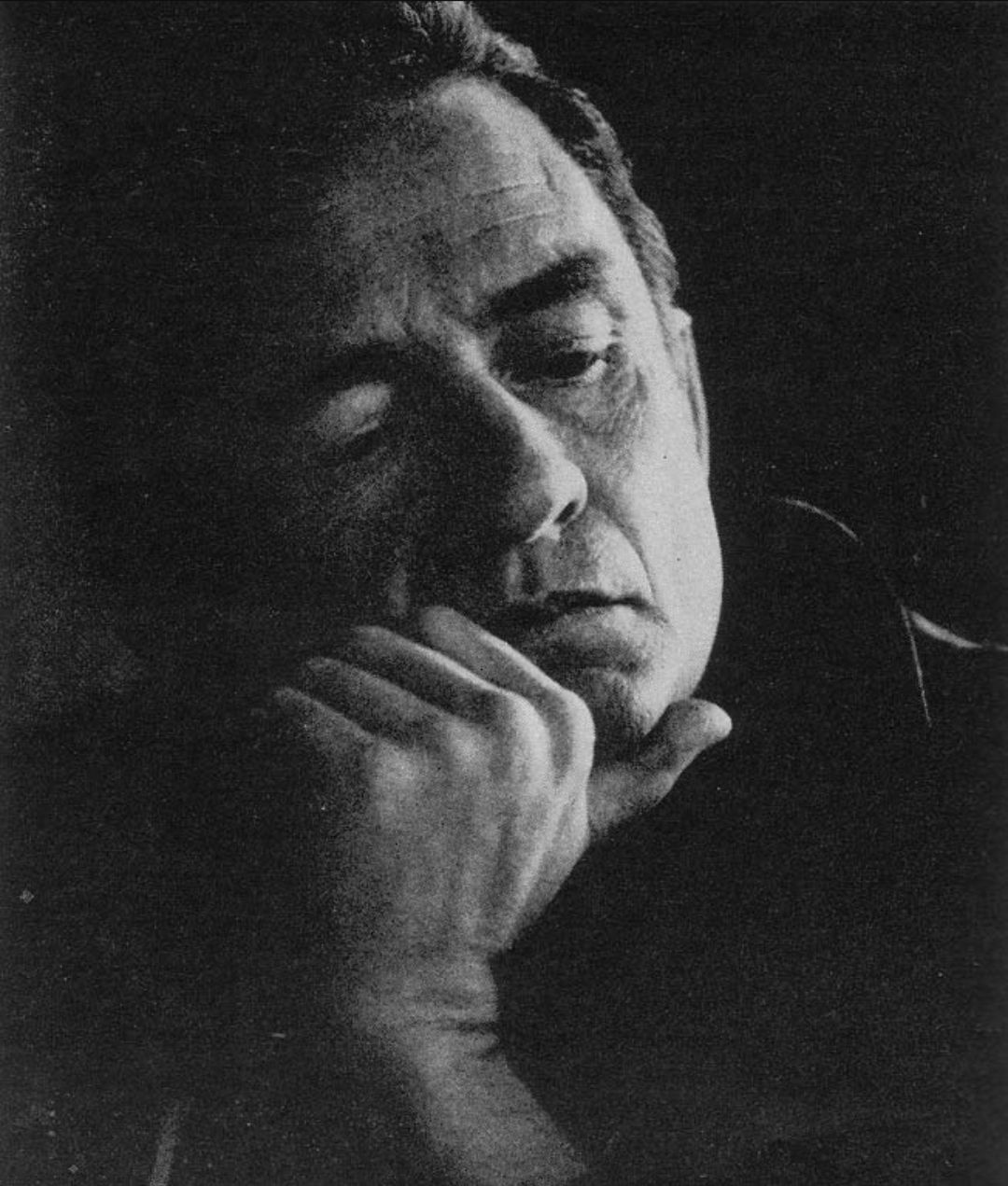
Twenty-three years ago, on September 12, 2003, the world lost Johnny Cash.
The Man in Black was 71 when he died, just months after the death of his wife and longtime musical partner, June Carter Cash. More than two decades later, though, Johnny Cash hardly feels like an artist who belongs to the past.
His unmistakable voice is still everywhere. Younger generations continue discovering his music, his image remains one of the most recognizable in American music, and his influence stretches far beyond country.
From Arkansas to Sun Records
Johnny Cash was born in 1932 and grew up in Arkansas during the Great Depression. After serving in the U.S. Air Force, he eventually made his way to Memphis and Sun Records—the label that helped launch a remarkable group of early rock and country stars.
Cash broke onto the music scene at Sun in 1955. “I Walk the Line,” “Folsom Prison Blues” and “Big River” were among the songs that established that deep voice and unmistakable sound.
But Cash was never easy to fit into one musical box.
Country, rock and roll, folk, gospel and blues all became part of his story. He could sing about faith and redemption, prisoners and outlaws, working people and heartbreak—and somehow all of it sounded believable coming from him.
The Man in Black
The black clothes became part of the Johnny Cash image, but eventually “The Man in Black” represented something more.
Cash had a particular interest in people who lived outside the comfortable parts of society. Nowhere was that more obvious than in his prison performances.
His historic concerts at Folsom Prison and San Quentin became defining moments in his career, with compassion, redemption and the lives of prisoners becoming recurring themes in his work.
By 1969, The Johnny Cash Show was putting an unusual mixture of musical styles and performers into American living rooms. His career would ultimately take him everywhere from Carnegie Hall to the White House.
Johnny and June
It’s nearly impossible to tell Johnny Cash’s story without June Carter Cash.
They married in 1968, beginning a 35-year marriage and musical partnership that became one of the most recognizable in country music. They performed and recorded together while navigating the difficult periods of Cash’s life away from the stage as well.

June died on May 15, 2003, at age 73. Johnny followed less than four months later.
That ending became part of the Johnny-and-June legend, but their story was much bigger than its final months. Their decades together produced music, performances and a partnership that remains part of Cash’s legacy.
One of Music’s Most Unlikely Comebacks
One of the most remarkable chapters of Johnny Cash’s career came when many artists his age would have been looking backward.
Instead, he found an entirely new audience.
Beginning in the 1990s, Cash’s American Recordings era stripped much of the production away and put that weathered voice front and center. He recorded songs associated with artists far removed from traditional country music, and suddenly another generation was paying attention.
Then came “Hurt.”
His interpretation of the Nine Inch Nails song—and its stark accompanying video—became one of the defining performances of his final years. Cash didn’t sound like an older artist trying to appeal to younger listeners. He somehow made the song sound as though it had belonged to him all along.
Twenty-Three Years Later
Johnny Cash died 23 years ago, but his story is still being written.
Just this summer, Belmont University announced that Cash’s personal archives have found a permanent home at the university in Nashville. The collection includes personal correspondence, handwritten notes, writings, songs and other materials from throughout his life and career. It will anchor a new Johnny Cash Learning Center and eventually include a digital collection available to the public.
That’s the unusual thing about Johnny Cash.
Every generation seems to find its own way into his music.
Maybe it’s “Ring of Fire.” Maybe it’s “Folsom Prison Blues.” Maybe it’s “I Walk the Line.” Or maybe someone hears “Hurt” first and then works backward through nearly half a century of music.
Twenty-three years after his death, the Man in Black is still gaining listeners.
And that may be the clearest measure of his legacy.
