
On February 12, 2015, Eddie Van Halen trades the concert stage for the Smithsonian’s National Museum of American History in Washington, D.C., for a special conversation about innovation, reinvention and his journey in America.
The appearance is part of What It Means to Be American, a national program presented by the Smithsonian and Zócalo Public Square. Moderated by entertainment journalist Denise Quan, the conversation explores Van Halen’s journey from Dutch immigrant to naturalized U.S. citizen and co-founder of one of America’s biggest rock bands, along with the experimentation that has changed the way the electric guitar is played, heard and designed.
It’s an especially fitting setting for a musician whose influence reaches far beyond the songs. Eddie is a self-taught inventor as much as a guitarist, constantly experimenting with instruments, equipment and technique in pursuit of the sound he wants.

That connection to innovation is becoming part of the Smithsonian’s collection as well. Van Halen and Fender are donating guitars and equipment representing the progression of his designs, including a master-built replica of his famous white-and-black-striped guitar, an EVH Wolfgang and a 5150-III amplifier and speaker cabinet.

Jay Bryan — Co-Editor & Contributor
Seeing Eddie Van Halen inside the National Museum of American History offers a different perspective from seeing him under stage lights. The focus this time isn’t simply on the rock star. It’s on the musician, immigrant, inventor and innovator behind a sound that has helped reshape rock & roll.
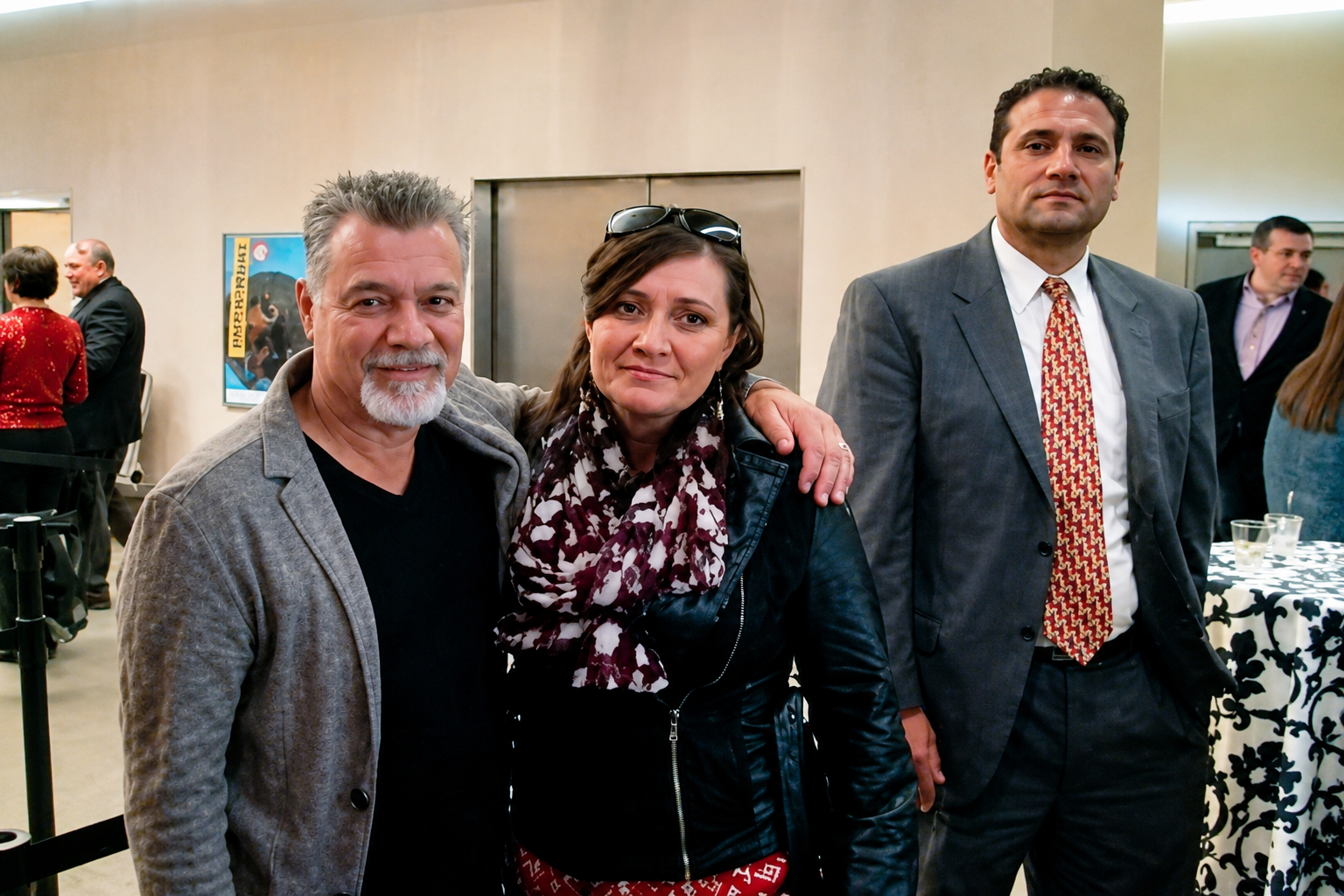
The day also offers the chance for a photo with Eddie himself — an unforgettable moment and, quite literally, a childhood dream come true. Meeting Eddie has been at the very top of my list for as long as I can remember, and the experience doesn’t disappoint. He is incredibly kind and gracious with his time, making a moment years in the dreaming even better than imagined.
